Sectional vs roller garage doors: Key differences, costs and benefits
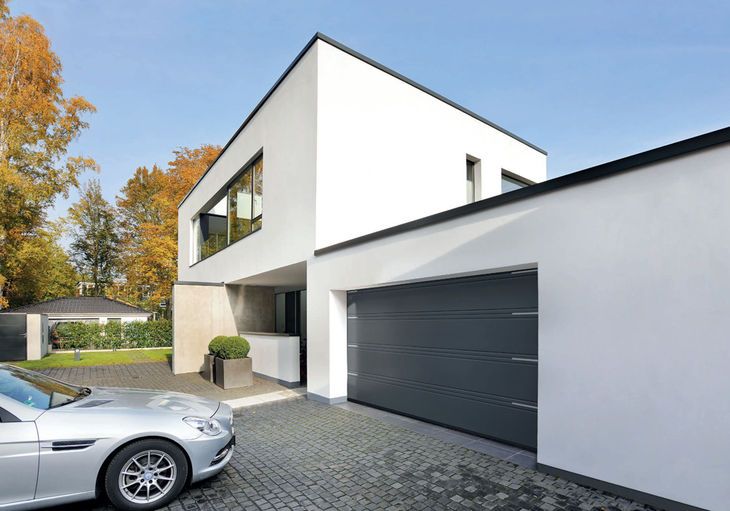
Choosing between a sectional and a roller garage door comes down to three things: how your garage is built, how you want to use it, and your budget.
Roller doors are compact, popular and well suited to garages with limited ceiling space. Sectional doors take up more internal room but give you better insulation, wider design choice and in many cases, more door for your money.
Read on for the full breakdown.
What are the differences between sectional and roller garage doors?
Both door types open vertically and need no clearance in front of the garage, so you can park right up to either one. That’s where the similarities largely end.
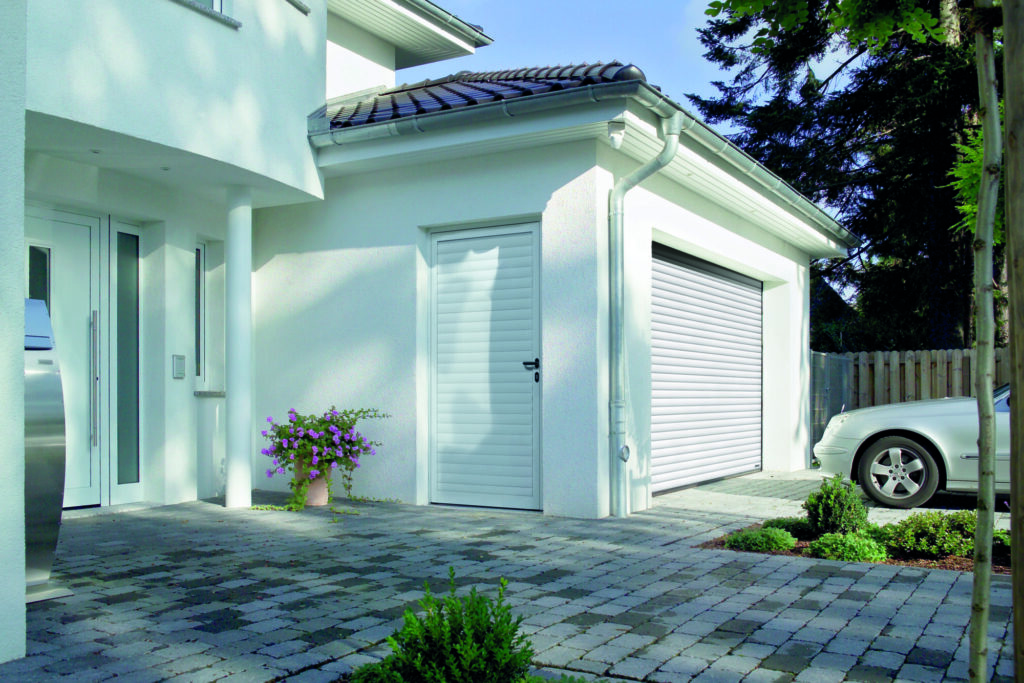
- A roller garage door is made from a series of narrow horizontal slats – usually aluminium or steel – that interlock to form a curtain. When the door opens, the curtain winds around a barrel inside a compact box housing mounted above the opening. That box can sit inside or outside the garage aperture, and the door runs without any ceiling tracking.
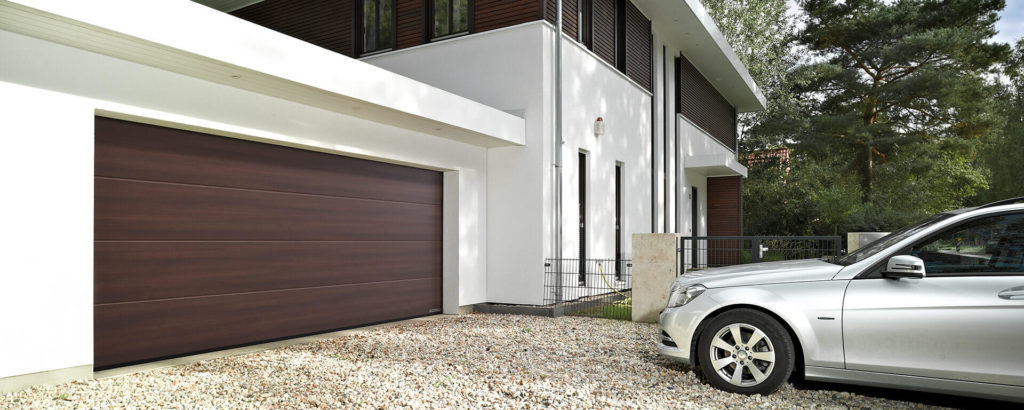
- A sectional garage door is made from multiple horizontal panels – typically galvanised steel, though aluminium, timber and GRP are all available – that are hinged together. When the door opens, each panel moves upward and the sections curve back along a set of ceiling-mounted tracks, sitting flat just beneath the garage roof when fully open. This means you need adequate headroom and depth inside the garage to accommodate the track run.
At a glance: Side-by-side comparison
| Feature | Roller door | Sectional door |
| Opening mechanism | Slats wind into a barrel | Panels slide back along ceiling tracks |
| Headroom required | 205–300 mm for the barrel box | 120–200 mm (with low-headroom gear) |
| Max width (typical) | ~5.5 m | ~8 m |
| Materials | Aluminium or steel | Steel, aluminium, timber, GRP |
| Design options | Limited (horizontal slat only) | Extensive (smooth, woodgrain, Georgian cassette, etc.) |
| Insulation | Good (double-skinned models) | Excellent (thick foam-filled panels) |
| Typical single door installed cost | £1,500–£3,000 | £1,750–£3,500 |
| Double door installed cost | £3,500–£4,000 | £3,200–£4,500 |
Which door looks best?
Design flexibility is one of the clearest differences between the two types.
- Roller doors offer one fundamental look: horizontal lines. You can choose from a range of colour finishes and subtle variations in slat profile, but the overall aesthetic stays the same across every model. That clean, minimal appearance suits modern and contemporary properties well.
- Sectional doors give you far more room to express the character of your home. Panel designs range from smooth silk-grain and micro-grain finishes through to deep wood-grain laminates, Georgian cassette patterns and bold metallic effects like anthracite. Window inserts, designer handle sets and almost any RAL colour are all possible.
Which is more secure?
Construction quality matters more than door type when it comes to security:
- Roller doors can be single or double skinned. A double-skinned aluminium roller door has foam-filled slats, making the curtain considerably stronger and harder to force. However, the motor is hidden inside the barrel, so you cannot inspect it before buying – quality of components varies enormously between manufacturers.
- Sectional doors use solid horizontal panels that interlock when closed, giving no flex or purchase along the door face. The motor and all working parts are fully exposed, so they are easier to assess and service. Doors from reputable manufacturers come with multi-point locking systems and Europrofile cylinders that resist drilling.
Which is best for accessibility?
Both door types operate smoothly on motorised systems, and automation is available as standard or as an option on almost every model. Electric operation is particularly important for roller doors – the larger aluminium models are heavy and are generally intended to be motor-operated only.
With a sectional door, manual spring-assisted operation is the default, with motorisation as an easy add-on. This means that if your power goes out, a sectional door is simpler to operate by hand.
How to choose: Which door suits your property?
Use this quick guide based on your situation:
Choose a roller door if:
- Your garage ceiling has pipes, lights or a loft hatch you need to keep accessible
- You want the simplest, most compact solution with no internal tracking
- Your budget is lower and you want a neat, modern finish
- Your garage opening is under 5.5 metres wide
Choose a sectional door if:
- Your garage is attached to the house and warmth matters
- You want the widest choice of colours, finishes and panel designs
- Your opening is over 5 metres wide (sectional panels handle large spans better)
- You want the door to work manually in a power cut without difficulty
- You use the garage as a gym, workshop or studio
Get expert advice tailored to your garage
Choosing between a sectional and roller door is about finding the right fit for your space, your home and how you actually use your garage day to day.
At Southern Doors, we don’t do one-size-fits-all recommendations. Our team will assess your opening, talk through your priorities and show you the options that genuinely make sense.
Book your free, no-obligation survey and get:
- Clear, honest advice from experienced installers
- Accurate, made-to-measure pricing
- Guidance on the best door for your layout, insulation needs and budget
No pressure. No hidden costs. Just straightforward expertise to help you get it right first time.
Get in touch with your local Southern Doors team today and take the guesswork out of choosing your new garage door.